
Summary: Choosing the right bathroom door for modern home projects involves balancing style, functionality, and space efficiency. From sliding and pocket doors to glass and solid options, each type offers unique benefits in terms of privacy, ventilation, durability, and overall aesthetic appeal.
Far from being a simple entry point, the right bathroom door can enhance a space’s functionality, aesthetic appeal, and overall feel. Selecting the right door enhances privacy, complements the overall décor, and optimizes available space. With various options in materials, finishes, and opening mechanisms, choosing the right type of bathroom door requires careful consideration of both aesthetics and practicality.
In this article, we’ll explore 10 types of bathroom doors commonly used in contemporary residential projects. Whether you’re working on compact apartments, luxury villas, or large-scale housing projects, understanding these choices will help you match the right door to the right space.
1. Hinged Doors
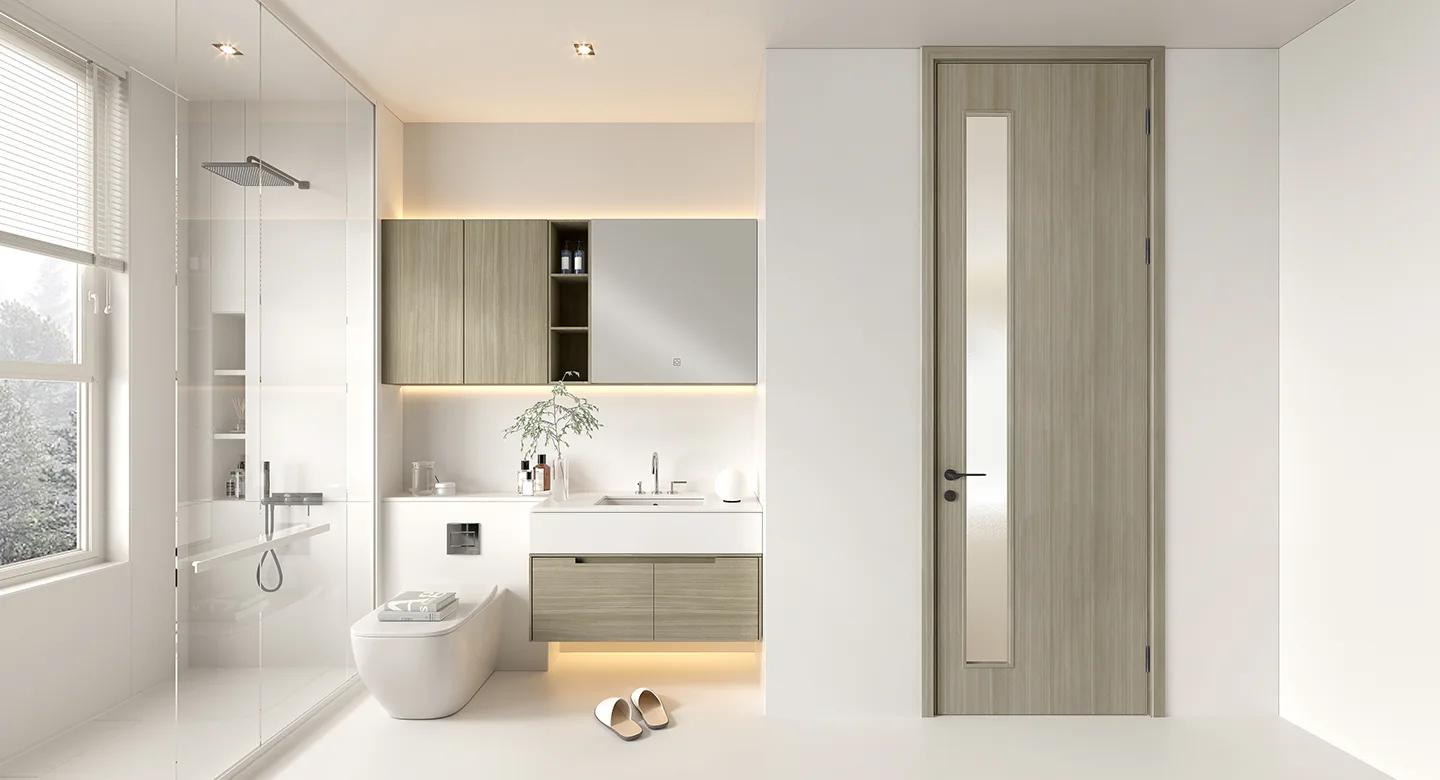
The classic hinged door is a timeless choice, offering a simple and effective solution for most bathrooms. They are typically hung on two or more hinges and swing inward or outward.
Pros: Easy to install, widely available, excellent for sound and privacy, and compatible with a variety of locking mechanisms. Hinged bathroom doors create a strong seal against moisture and drafts.
Cons: Require ample clearance space to swing open, which can be a challenge in smaller bathrooms.
Best for: Standard-sized bathrooms where space is not a major concern.
2. Pocket Doors
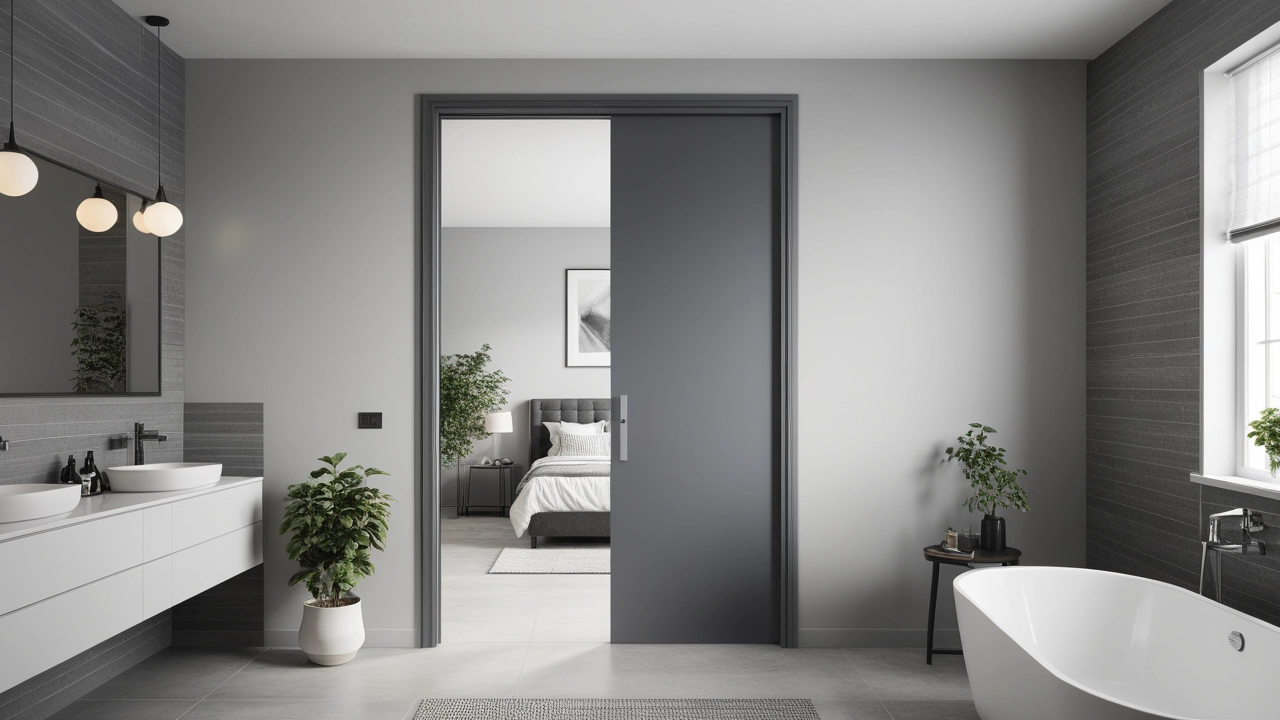
Pocket doors are a sleek, space-saving solution that slides into a compartment within the wall. This design frees up valuable floor and wall space that would otherwise be needed for a swinging door.
Pros: Perfect for tight spaces, such as small en-suites or powder rooms. Their minimalist design provides a clean, modern aesthetic. These bathroom doors are also a great option for creating an accessible design.
Cons: Installation is more complex and requires significant wall space. They can be more difficult to repair if the mechanism fails and may not offer the same level of sound insulation as hinged doors.
Best for: Small bathrooms, master bedroom en-suites, and spaces where every square foot counts.
3. WPC Doors for Bathroom
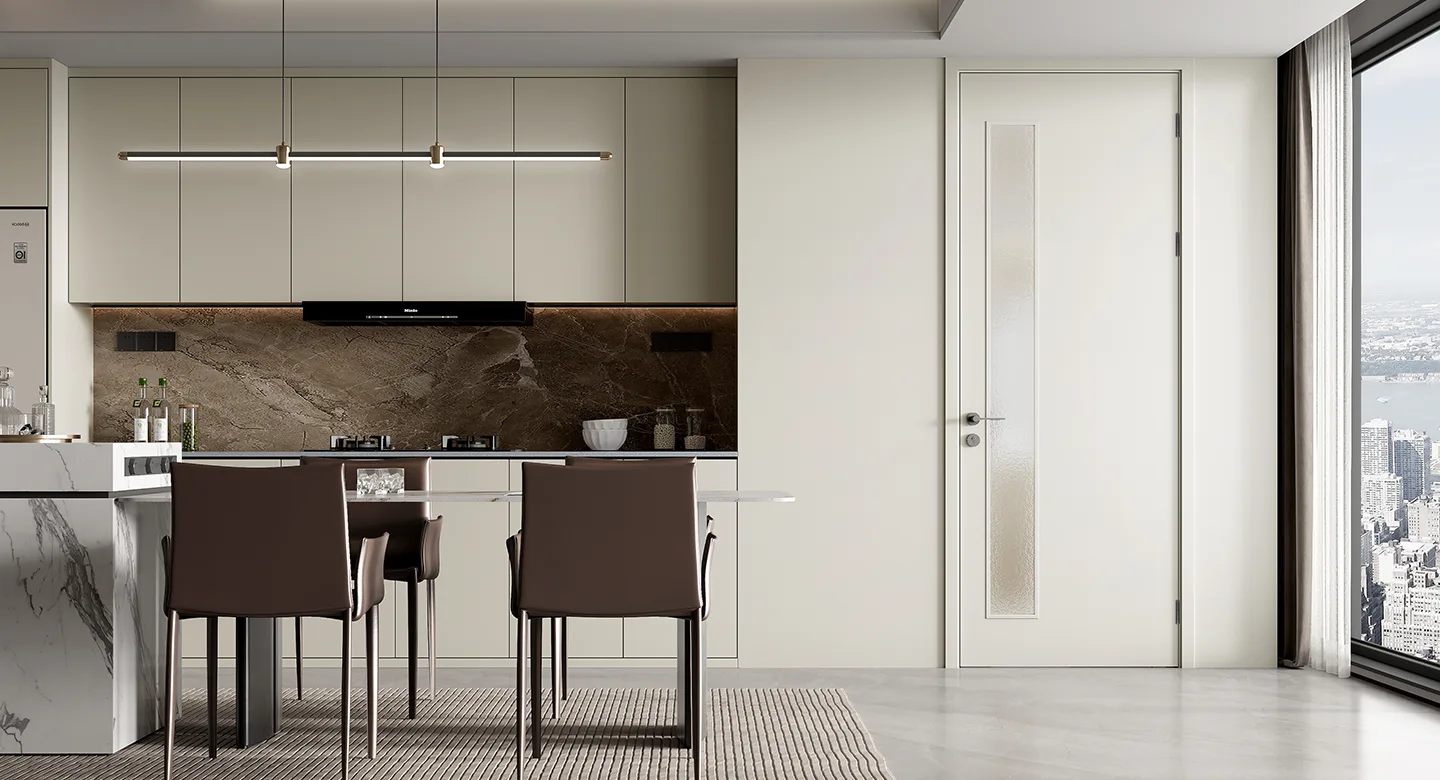
WPC (Wood Plastic Composite) doors are a popular modern solution for bathrooms, combining the strength of wood with the moisture resistance of plastic. They are designed to handle humid environments while offering a clean and contemporary appearance.
Pros:
WPC doors offer excellent moisture resistance, making them ideal for humid bathroom environments. They are durable, termite-proof, and require minimal maintenance. Additionally, they provide a balanced look that mimics wood while being more stable.
Cons:
They can be more expensive than PVC alternatives and may have limited design variations compared to natural wood. Some options may also lack the premium feel of solid timber.
Best for:
WPC doors are best for modern homes that need a long-lasting, moisture-resistant solution without compromising too much on aesthetics.
4. Aluminium Bathroom Door
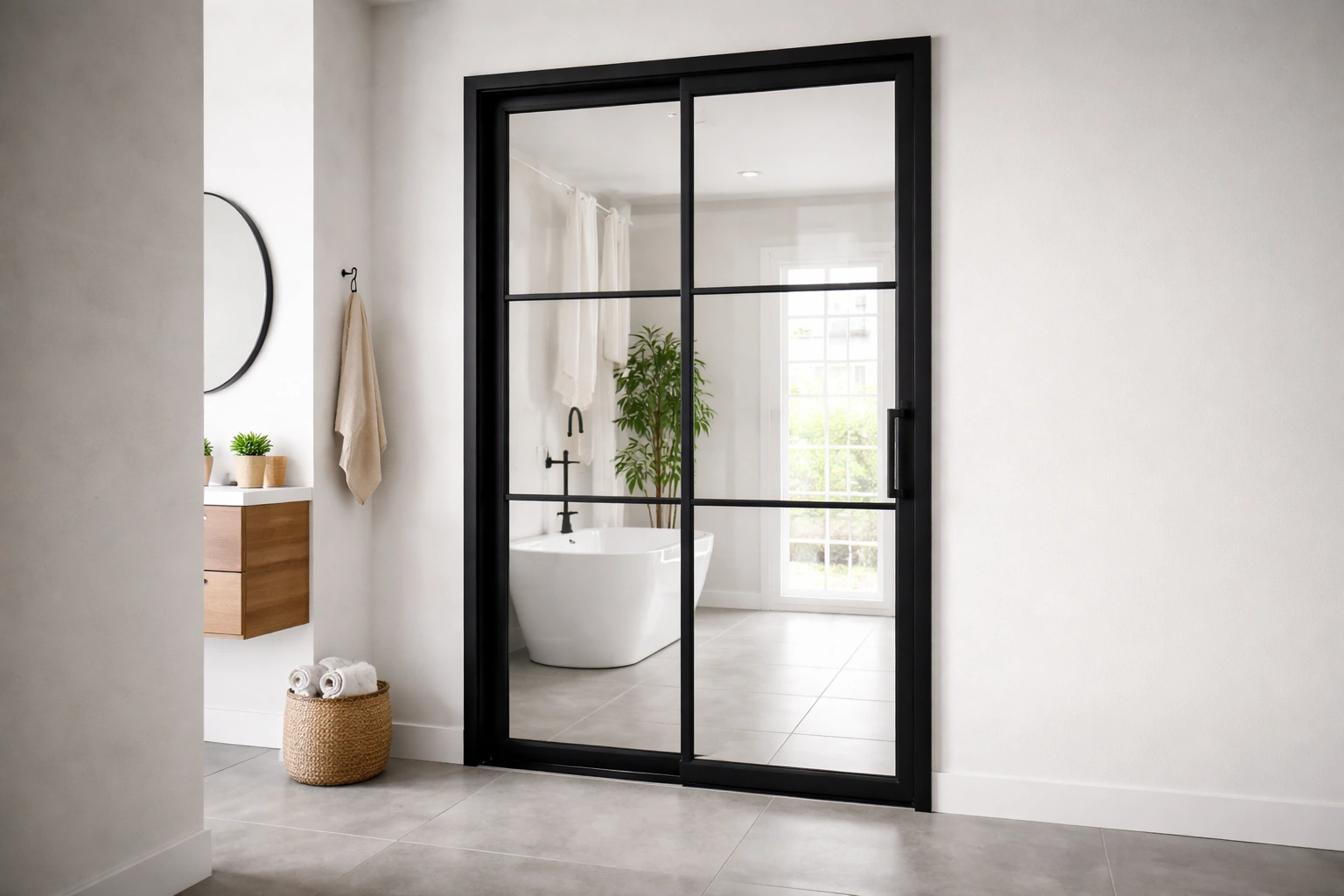
Aluminium bathroom doors are known for their sleek design and exceptional durability. Commonly used in modern interiors, they provide a lightweight yet sturdy option that resists rust and performs well in wet conditions.
Pros:
Aluminium doors are highly durable, rust-resistant, and lightweight. They offer a sleek, modern appearance and can be paired with glass panels for added style. Their strength ensures long-term performance even in wet conditions.
Cons:
They tend to be more expensive than PVC doors and may not provide strong sound insulation. Their metallic look might also feel too industrial for some interior styles.
Best for:
They are ideal for contemporary and minimalist home projects that prioritize durability and a clean, modern aesthetic.
5. Louvered Doors
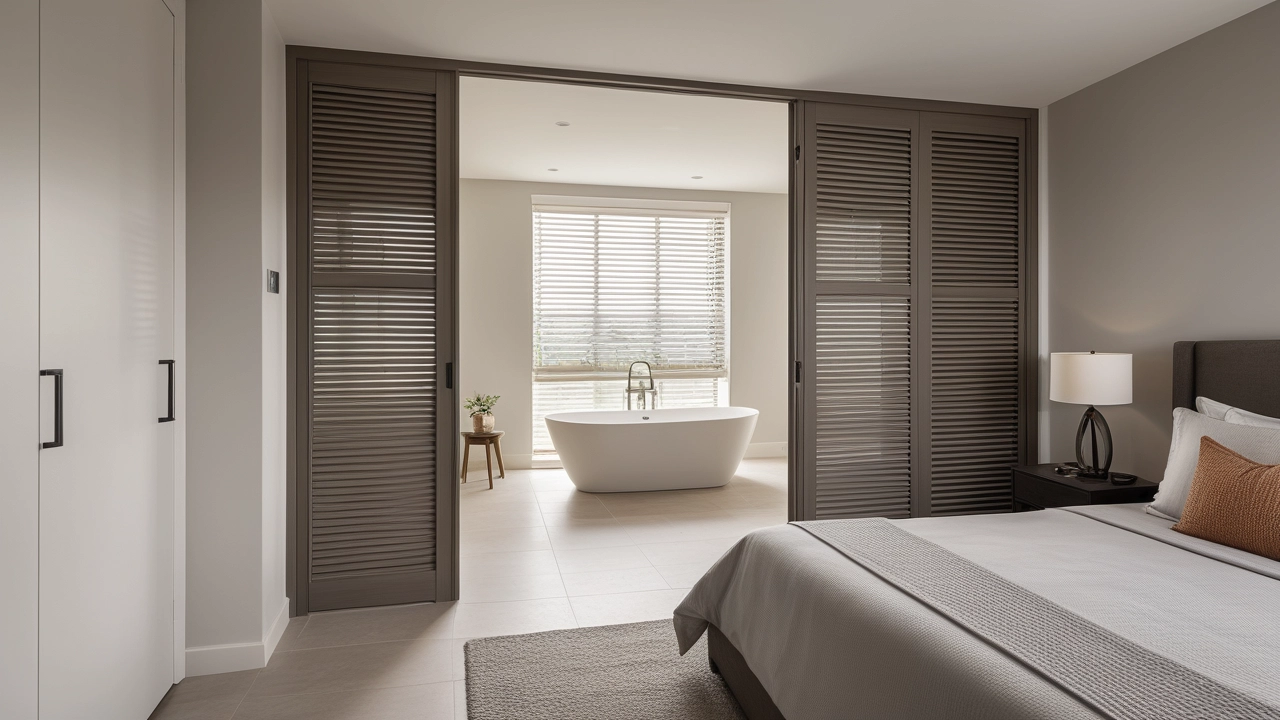
Louvered doors consist of horizontal slats (louvers) that allow for air circulation. This design is excellent for ventilating a bathroom and preventing moisture buildup.
Pros: The primary advantage of louvered bathroom doors is ventilation, which helps to prevent mold and mildew. They offer a unique, decorative look.
Cons: The open slat design provides minimal privacy and sound insulation. They can also be difficult to clean due to dust accumulation on the slats.
Best for: Bathrooms in humid climates or as an accent door for a rustic or traditional design.
6. Bifold Doors
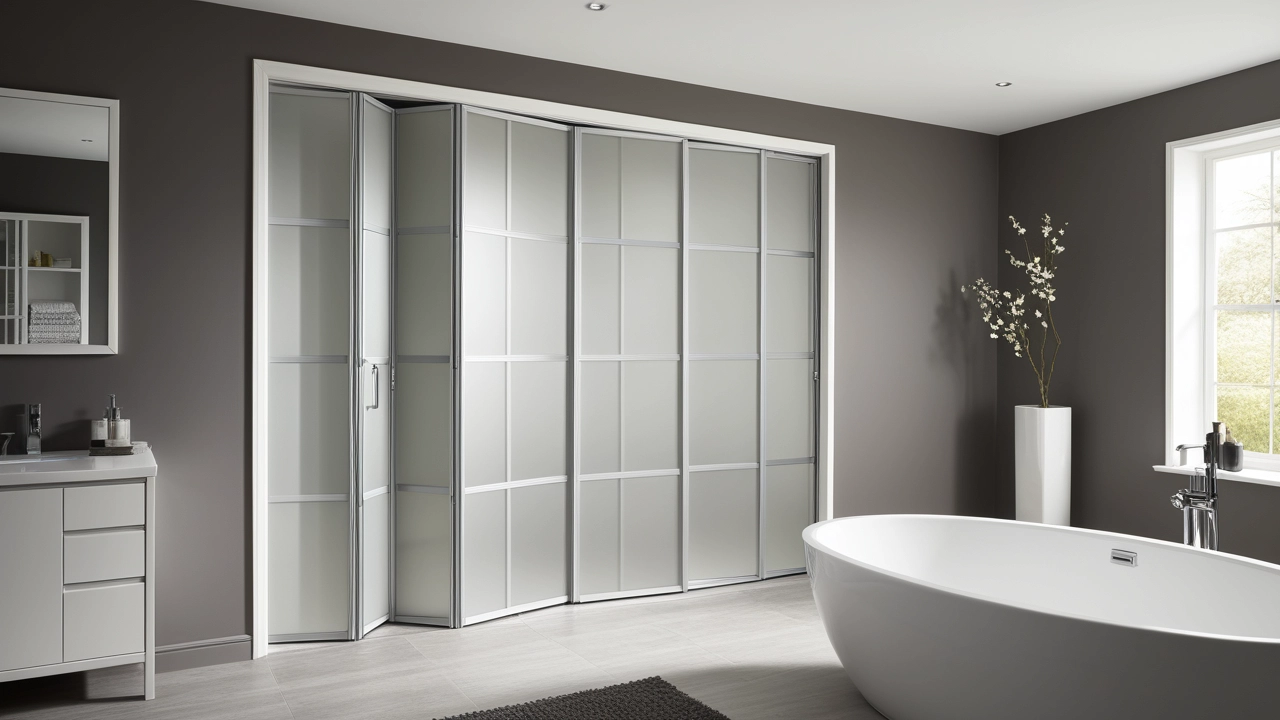
Bifold doors consist of two panels that are hinged together and fold in on themselves. This design allows them to occupy less space than a traditional hinged door.
Pros: Space-efficient and a good alternative to pocket doors when wall space is not available. Bifold bathroom doors are versatile and come in a variety of styles.
Cons: The folding mechanism can be prone to wear and tear. They may not provide the same level of sound and privacy as a solid hinged door.
Best for: Smaller bathrooms, laundry closets, or any tight space where a traditional swing door is impractical.
7. Glass Doors
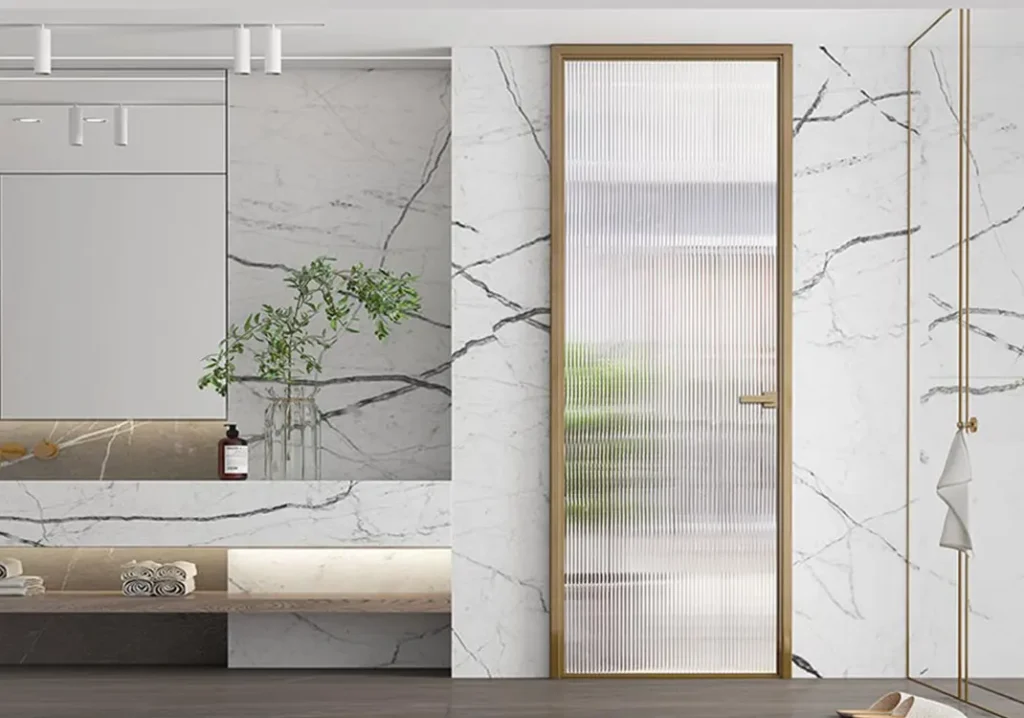
Glass doors offer a contemporary and sophisticated look. They can be full-pane or have a metal or wooden frame. Options include frosted, clear, or textured glass.
Pros: Allow natural light to pass through, making the space feel larger and brighter. A variety of finishes, such as frosted or acid-etched glass, can be used to ensure privacy.
Cons: Privacy is a significant consideration. Clear glass is a non-starter for most bathrooms unless part of a larger, private en-suite. These bathroom doors may also require more frequent cleaning to prevent smudges and water spots.
Best for: Modern and minimalist designs, particularly for walk-in showers or en-suite bathrooms where a seamless look is desired.
8. PVC Bathroom Doors
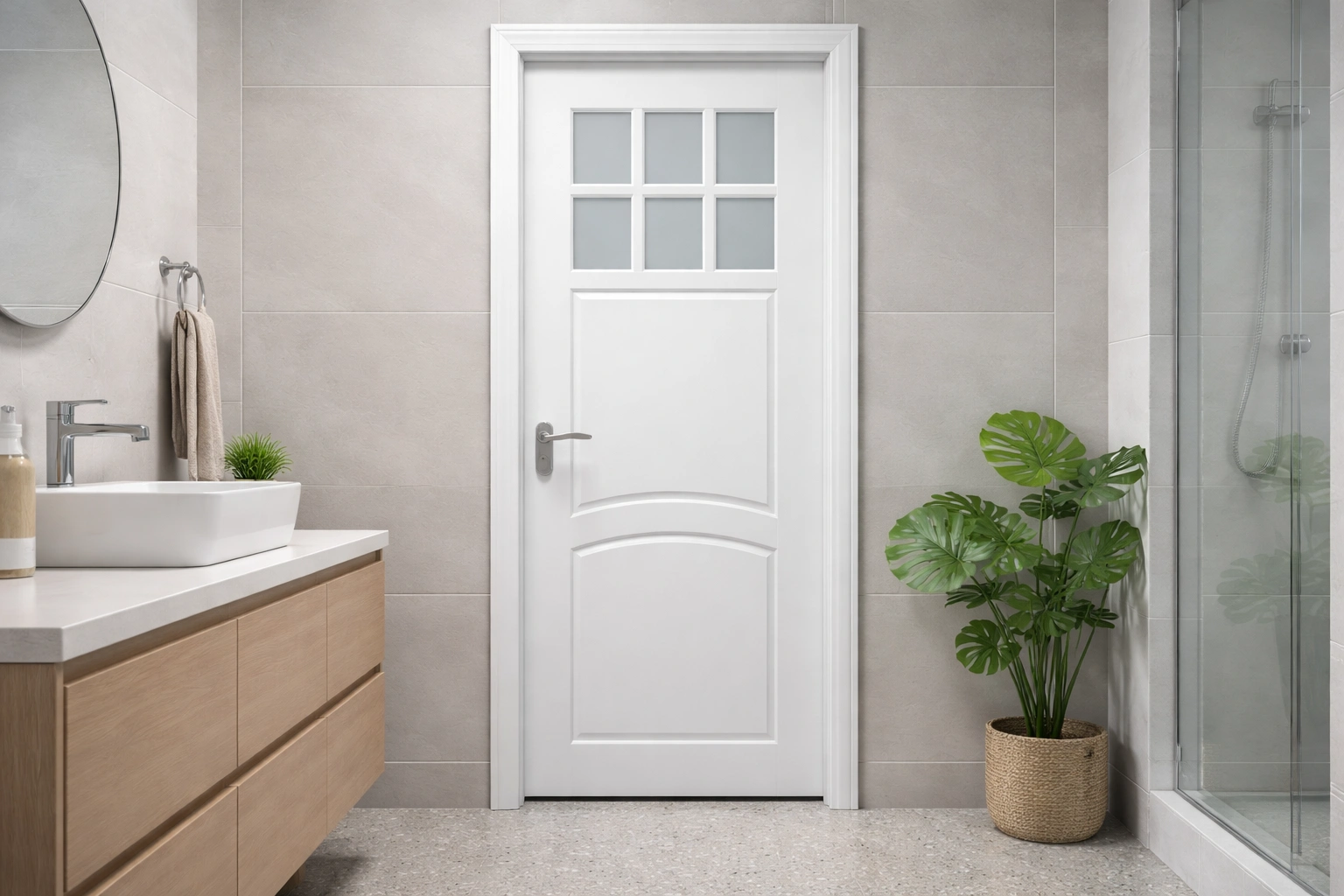
PVC bathroom doors are a practical and cost-effective choice widely used in residential projects. Made from water-resistant plastic, they are easy to maintain and come in various styles, making them suitable for everyday bathroom use.
Pros:
PVC doors are affordable, waterproof, and easy to install. They come in a wide range of colors and designs, making them a flexible choice for different interiors. Their lightweight nature also makes them convenient for everyday use.
Cons:
They are less durable compared to WPC or aluminium doors and may warp or discolor over time. Their overall appearance can also feel less premium.
Best for:
They are best suited for budget-friendly projects, rental properties, or areas where basic functionality is sufficient.
9. Solid Core Doors
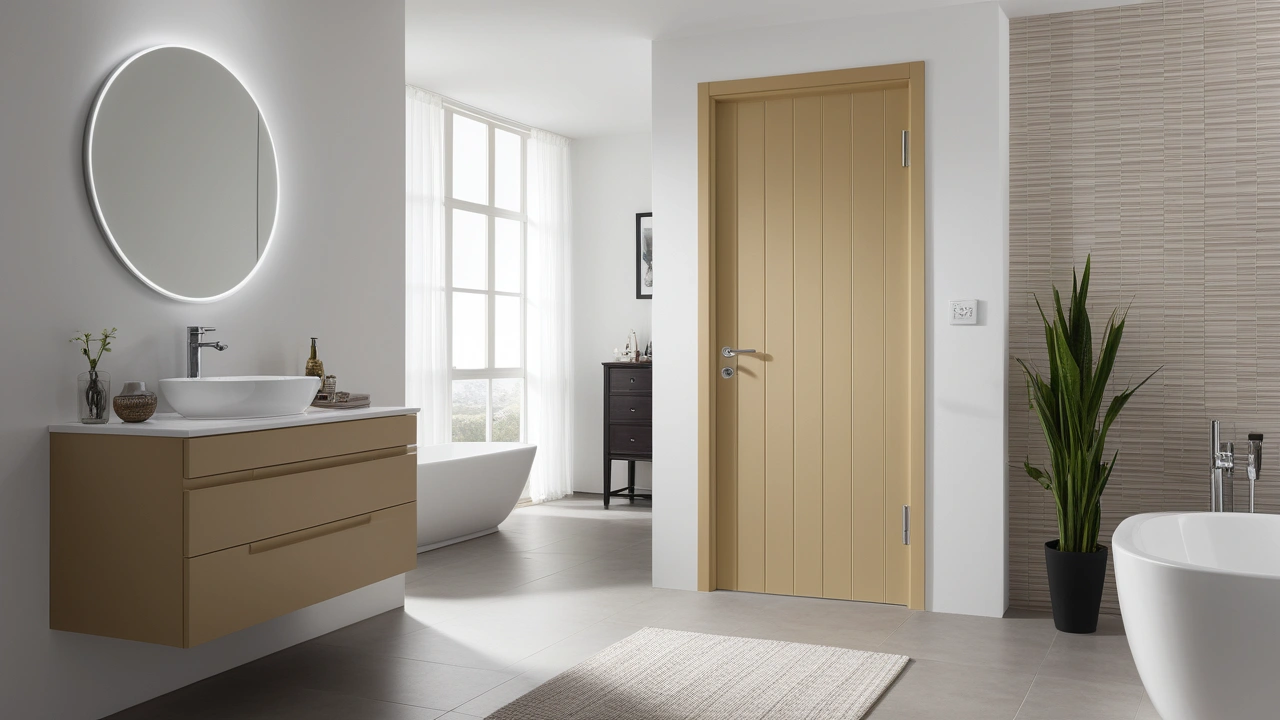
Solid core doors are made from a composite material or particleboard with a laminated or veneered finish. They are a heavier and more durable alternative to hollow-core doors.
Pros: Excellent for noise reduction and providing a robust feel. They offer superior privacy and are less prone to damage than hollow-core options.
Cons: Heavier, which may require sturdier hinges. They are also typically more expensive than hollow-core doors.
Best for: Any bathroom where sound insulation and a sense of quality are paramount.
10. Sliding Doors
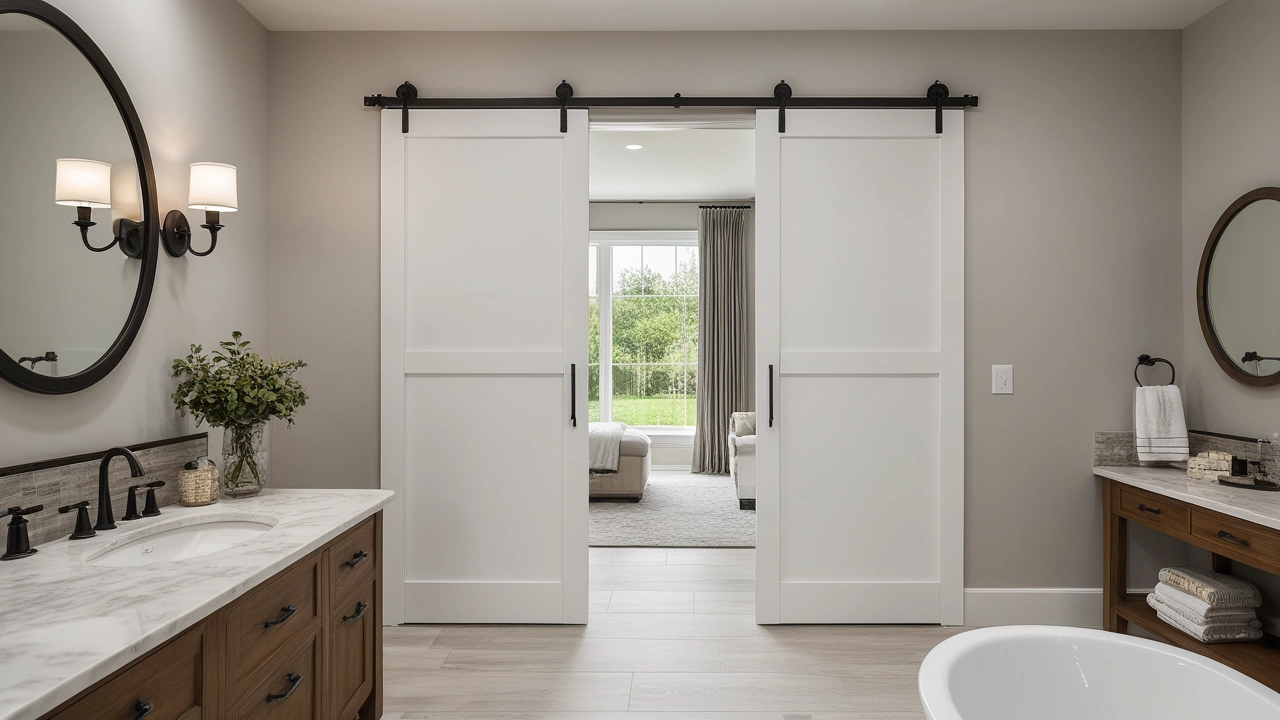
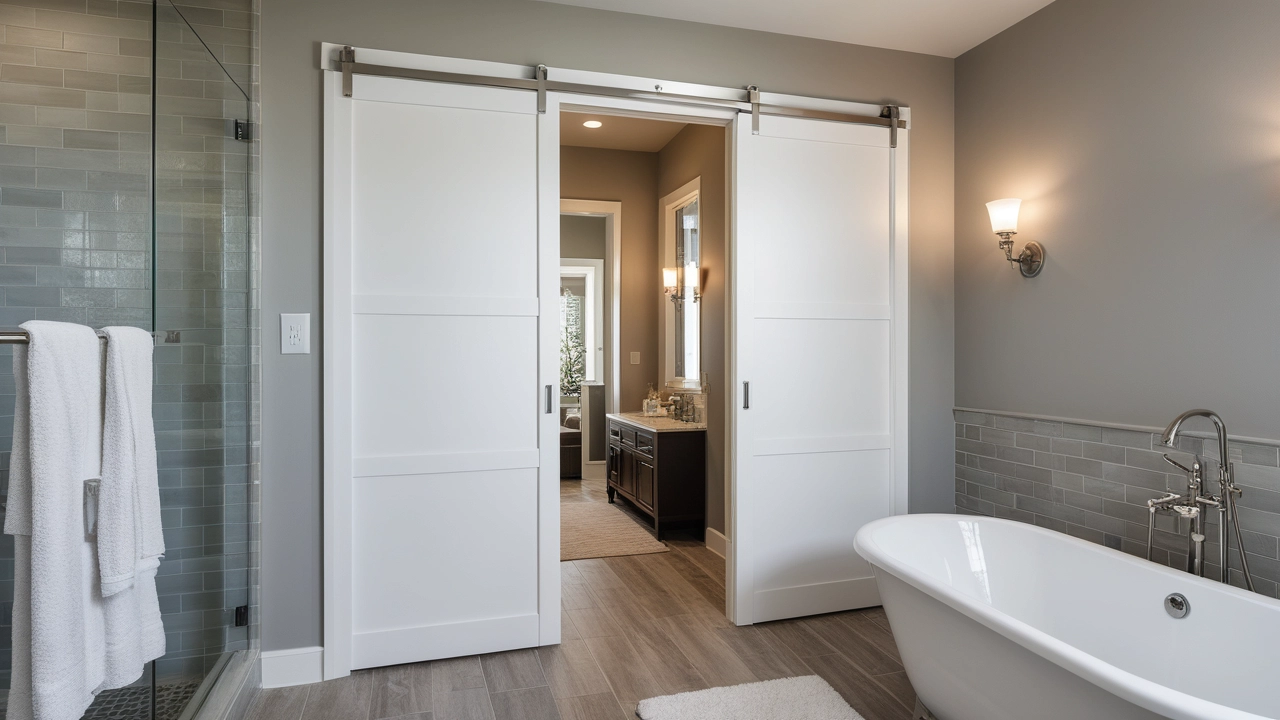
Similar in function to pocket doors, sliding bathroom doors are mounted on a track but remain visible on the outside of the wall, rather than disappearing into it.
Pros: A stylish space-saving solution that is easier to install than a pocket door. The track can be an aesthetic element in itself.
Cons: They do not create a strong seal and may lack privacy. They are also not suitable for walls with light switches or other fixtures.
Best for: Bathrooms where you want to conserve space, and the wall on which the door slides is free of obstructions.
Conclusion
The right bathroom door can elevate a project from good to exceptional. By carefully considering the practicalities of space, the desire for privacy, and the overall design aesthetic, interior designers and contractors can choose the perfect option. From the classic elegance of hinged doors to the modern efficiency of pocket and barn doors, the choices are vast and varied. Understanding the pros and cons of each type is the key to creating a functional and beautiful spa space that stands the test of time.
OPPOLIA is a well-known furnishing manufacturer in China. We provide whole-house solutions, including custom cabinets, interior doors, wardrobes, bathroom vanities, furniture, windows and more. If you are a contractor looking for a reliable project partner, OPPOLIA is the best brand choice. Learn more about our completed projects and contact us for a free quote!
FAQs about Types of Bathroom Doors for Home Projects
Pocket doors and bifold doors are ideal because they save space and don’t require swing clearance.
Solid core and hinged doors provide the best privacy due to their strong sealing and sound insulation.
Yes, especially frosted or textured glass, which allows light while maintaining privacy.
Sliding doors, glass doors, and mirrored doors are popular choices for modern and minimalist interiors.
Louvered doors are best for airflow, helping reduce moisture and prevent mold buildup.
Water-resistant materials like PVC, aluminum, fiberglass, and UPVC are ideal for durability and low maintenance.