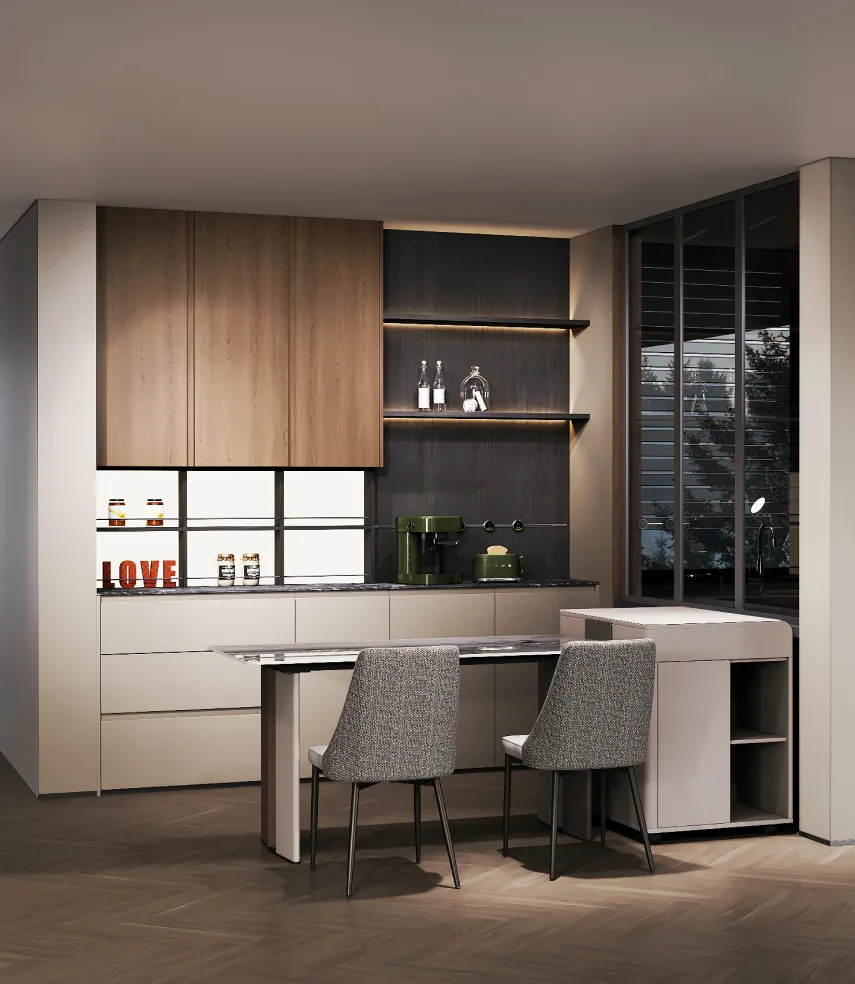

Summary: White kitchens remain timeless when designed with texture, contrast, and functionality. From natural wood accents to integrated appliances and layered lighting, these ideas ensure long-lasting style. They enhance space, support flexibility, and stay relevant well beyond 2030 for modern interiors.
White kitchens have remained a cornerstone of interior design for decades, and their popularity shows no sign of fading. For interior designers working on luxury residences, compact apartments, or modern family homes, white kitchens continue to offer unmatched versatility, timeless appeal, and strong resale value.
Yet not every white kitchen ages gracefully. Some feel sterile within a few years, while others maintain a timeless appeal that still feels relevant as design trends shift. The difference lies in material selection, texture layering, proportions, lighting, and functionality.
In this guide, we explore 20 sophisticated white kitchen ideas that are expected to remain stylish well beyond 2030. From minimalist layouts to layered textures and sustainable cabinetry solutions, these concepts can inspire your next residential or commercial kitchen project.
- 1. Layer Multiple Shades of White
- 2. Add Natural Wood Accents
- 3. Incorporate Statement Lighting
- 4. Use Integrated Appliances
- 5. Combine White Cabinets With Marble Surfaces
- 6. Introduce Black Hardware for Contrast
- 7. Embrace Floor-to-Ceiling Cabinetry
- 8. Use Textured White Tiles
- 9. Design a Two-Tone White Kitchen
- 10. Prioritize Natural Light
- 11. Add Open Shelving Strategically
- 12. Minimalist Handleless White Kitchens
- 13. Sustainable White Kitchen Materials
- 14. Create a Seamless Backsplash
- 15. Add Architectural Details
- 16. Incorporate Hidden Storage Solutions
- 17. Use Large Kitchen Islands as Focal Points
- 18. Blend Traditional and Contemporary Elements
- 19. White Kitchens with Metallic Accents
- 20. Design for Flexibility
- Conclusion
- FAQs About White Kitchen Ideas
1. Layer Multiple Shades of White
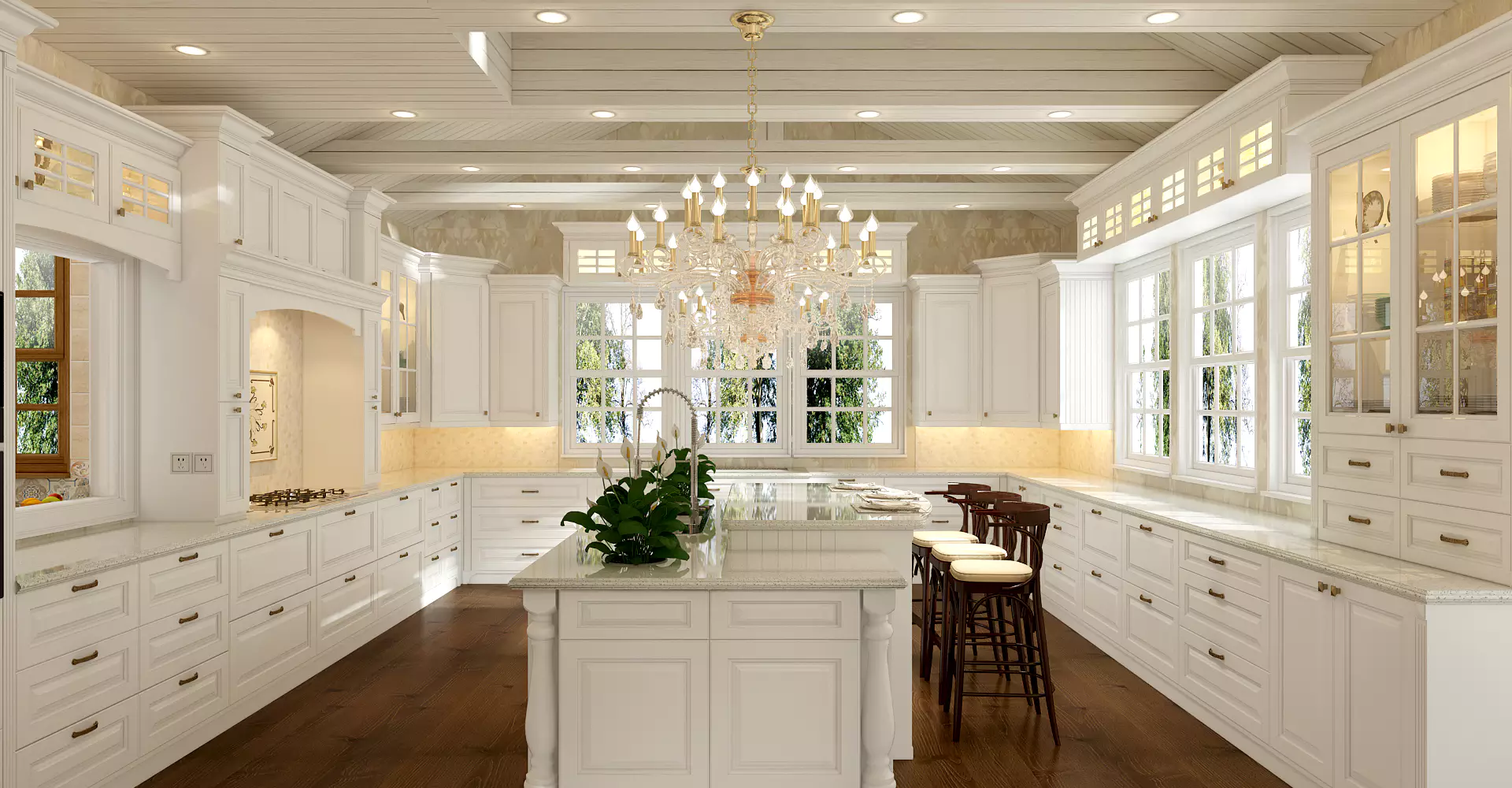
One of the most common mistakes in white kitchens is using a single tone throughout the entire space. Combining warm white cabinetry with cooler white walls or creamy quartz countertops creates depth and sophistication.
Interior designers can use undertones strategically:
- Warm whites for traditional or transitional spaces
- Crisp whites for contemporary projects
- Soft ivory tones for luxury residential interiors
Layering prevents the kitchen from feeling one-dimensional while maintaining a cohesive palette.
2. Add Natural Wood Accents
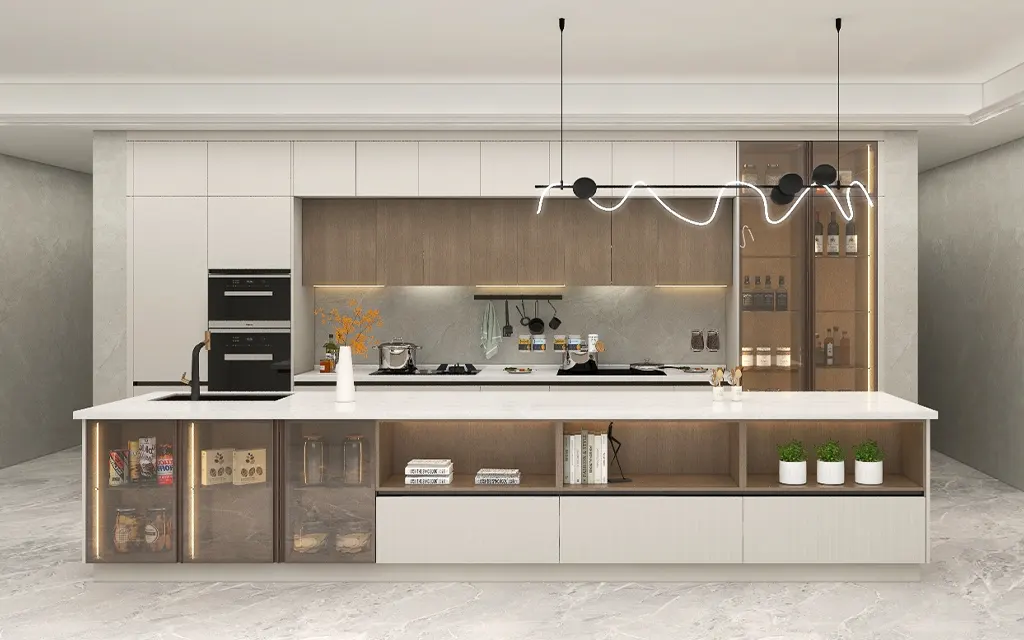
Wood introduces warmth that balances white surfaces beautifully. Walnut shelving, oak islands, or white flooring can soften modern kitchens and create a more welcoming atmosphere.
This combination continues to define many high-end modern white kitchen ideas because it blends minimalism with organic texture.
Popular pairings include:
- White cabinets with islands
- Matte white cabinetry with walnut floating shelves
- White kitchens with natural timber ceiling beams
These combinations feel timeless rather than trend-driven.
3. Incorporate Statement Lighting
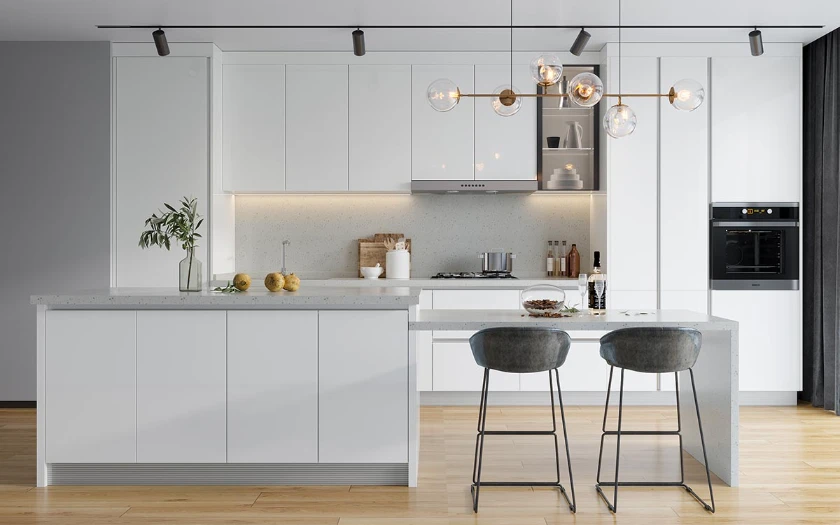
Lighting often determines whether a white kitchen feels luxurious or generic. Sculptural pendants, oversized chandeliers, and layered task lighting instantly elevate the space.
Designers should focus on:
- Warm LED temperatures
- Mixed metal finishes
- Oversized fixtures for visual impact
- Under-cabinet lighting for depth
Statement lighting becomes especially important in all-white kitchens where fewer colors compete for attention.
4. Use Integrated Appliances
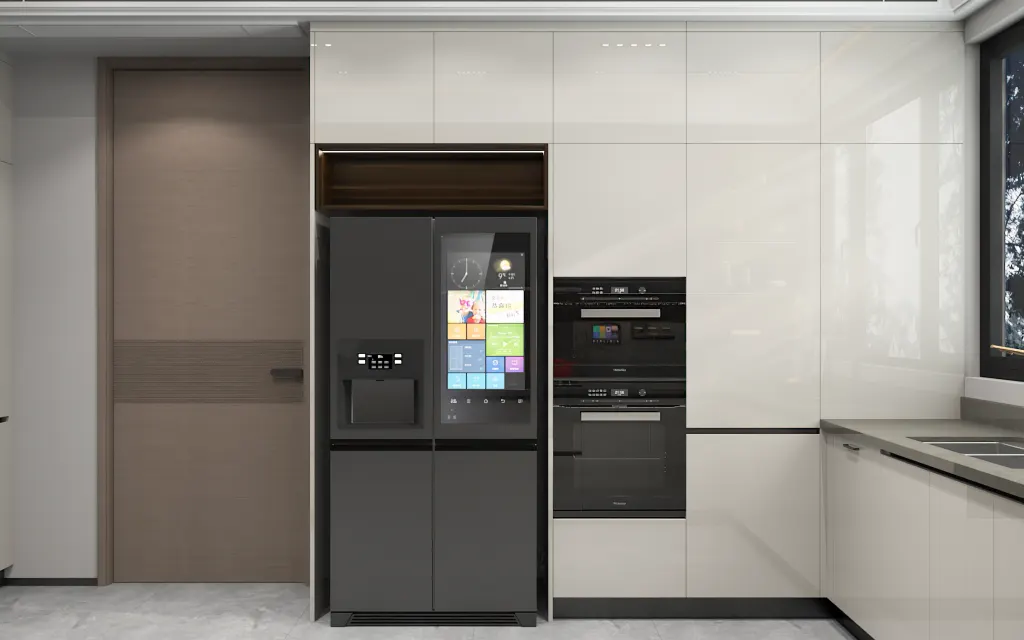
Seamlessly integrated appliances help white kitchens maintain a clean architectural appearance. Panel-ready refrigerators and concealed dishwashers reduce visual clutter and support minimalist aesthetics.
Popular concealed elements include:
- Refrigerators
- Dishwashers
- Range hoods
- Coffee stations
These seamless layouts are particularly effective in luxury condos and multifunctional living spaces.
5. Combine White Cabinets With Marble Surfaces
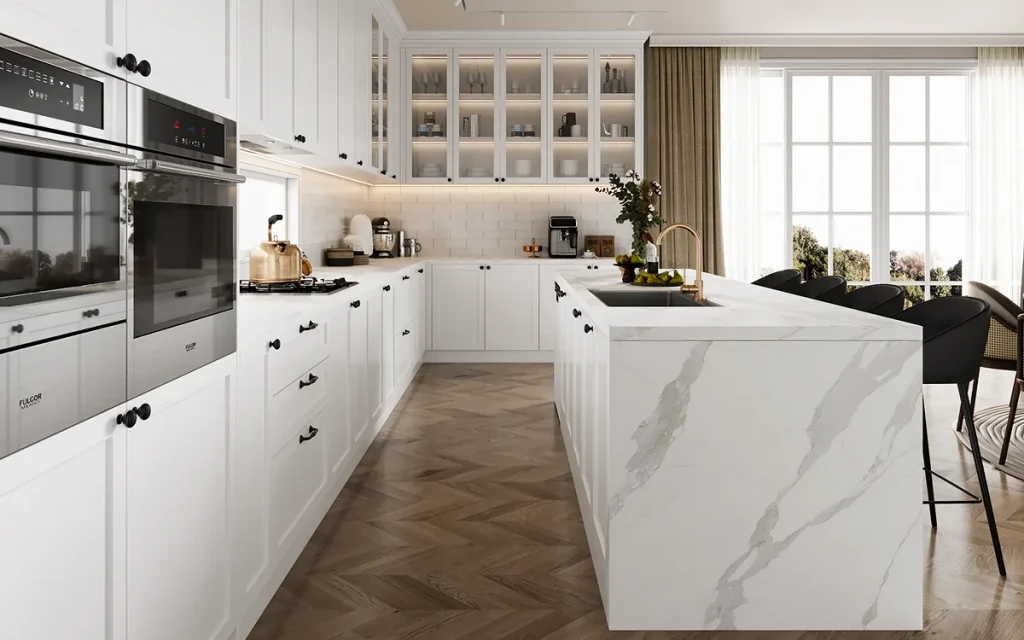
Marble remains one of the most enduring luxury materials in kitchen design. White marble with subtle veining adds movement and texture while preserving a bright aesthetic.
Timeless combinations include:
- Calacatta marble countertops
- Full-height marble backsplashes
- Waterfall marble islands
- Honed marble finishes for softer elegance
For clients seeking lower maintenance, high-quality quartz with marble-inspired veining offers a practical alternative.
6. Introduce Black Hardware for Contrast
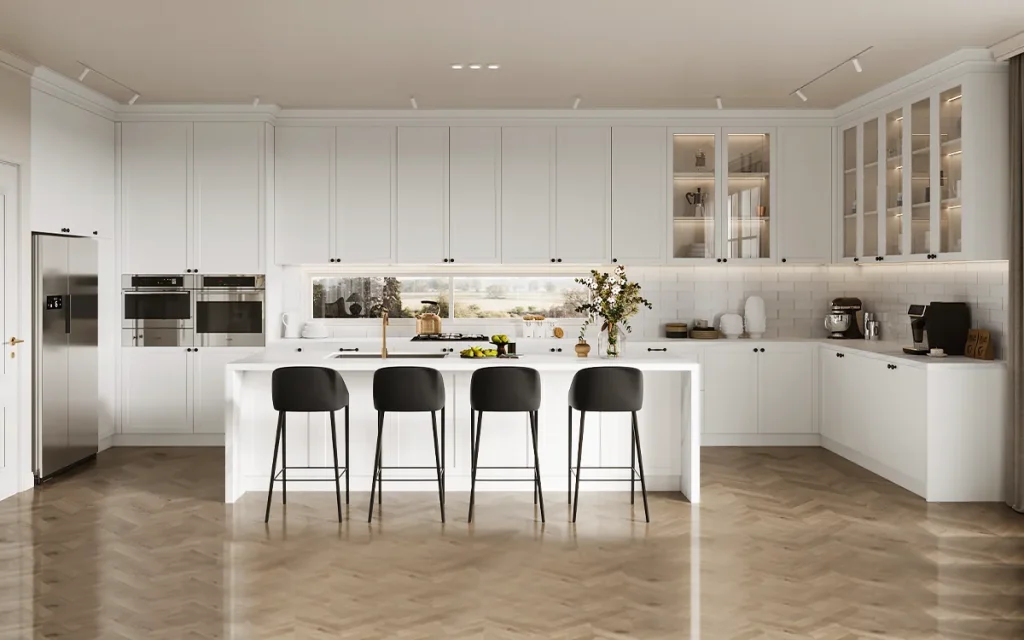
Black hardware continues to prove its staying power in white kitchens. Matte black handles, faucets, and lighting fixtures provide strong visual definition without overwhelming the palette.
This contrast works particularly well in:
- Contemporary kitchens
- Transitional spaces with clean lines
For interior designers, black accents are an easy way to create depth while maintaining a timeless foundation.
7. Embrace Floor-to-Ceiling Cabinetry
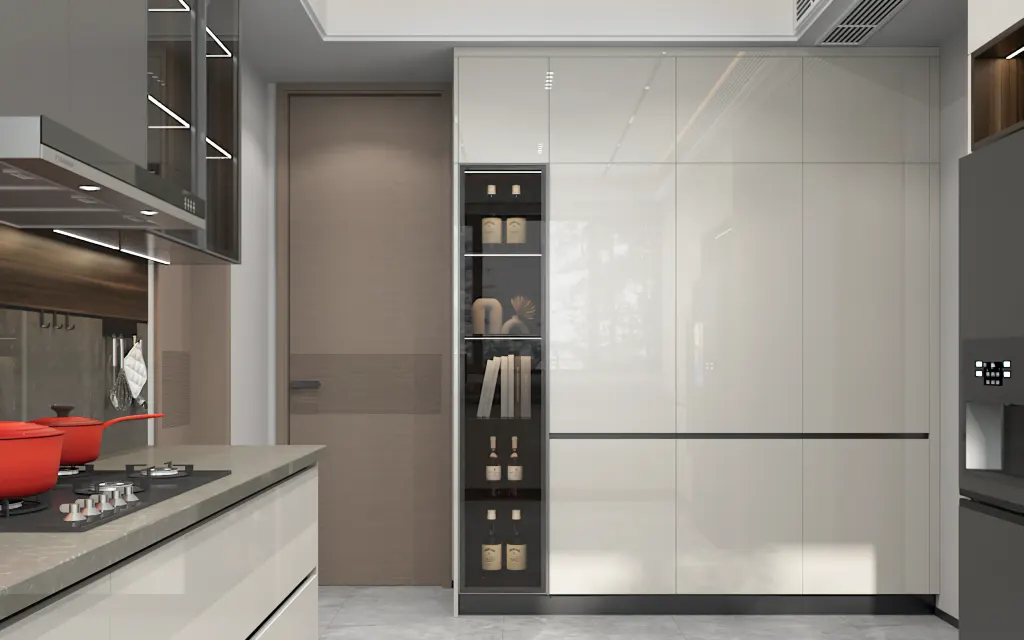
Tall cabinetry creates a streamlined and architectural look that feels increasingly relevant in modern homes. Floor-to-ceiling storage also improves functionality by maximizing vertical space.
Benefits include:
- Reduced visual clutter
- Better organization
- Enhanced luxury appearance
- Increased storage capacity
This strategy is especially valuable in urban residences and smaller floor plans where every inch matters.
8. Use Textured White Tiles
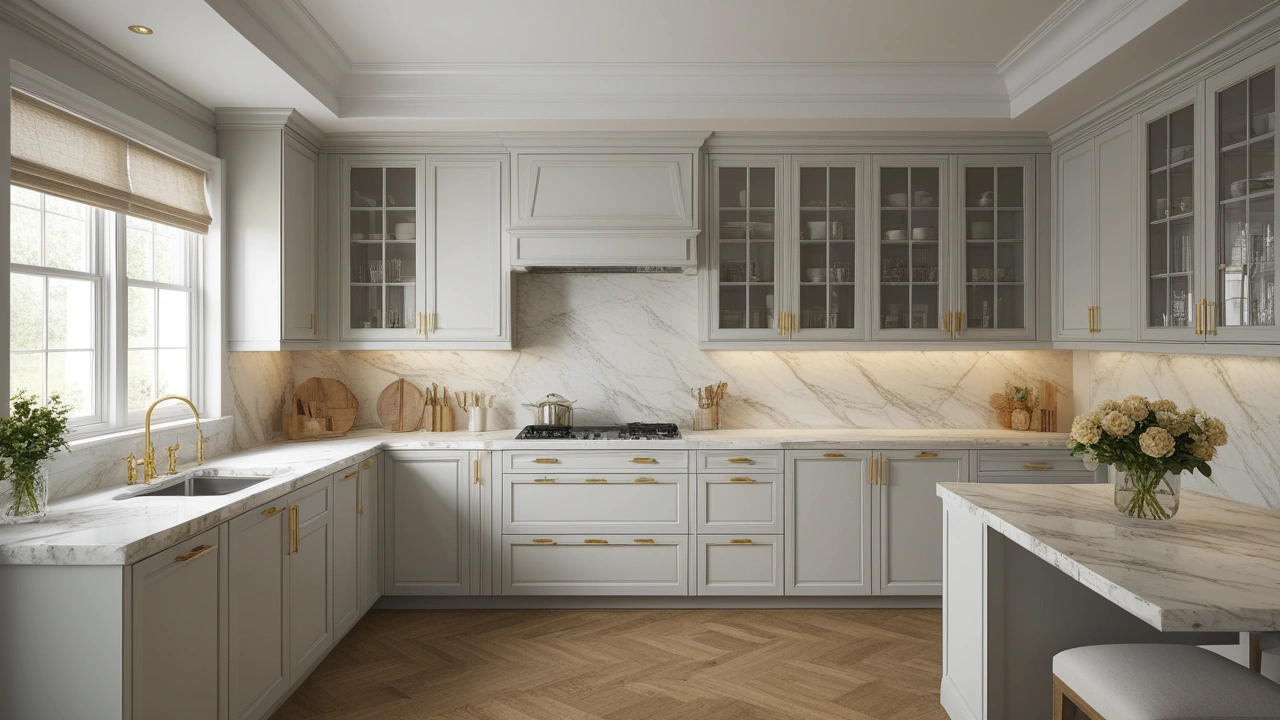
Texture prevents monochromatic kitchens from feeling flat. Handmade ceramic tiles, fluted backsplashes, and textured stone surfaces add subtle dimension while preserving a neutral palette.
Popular options include:
- Zellige tiles
- Vertical stacked subway tiles
- Ribbed ceramic finishes
- Textured porcelain slabs
These materials reflect light differently throughout the day, creating a dynamic visual experience.
9. Design a Two-Tone White Kitchen
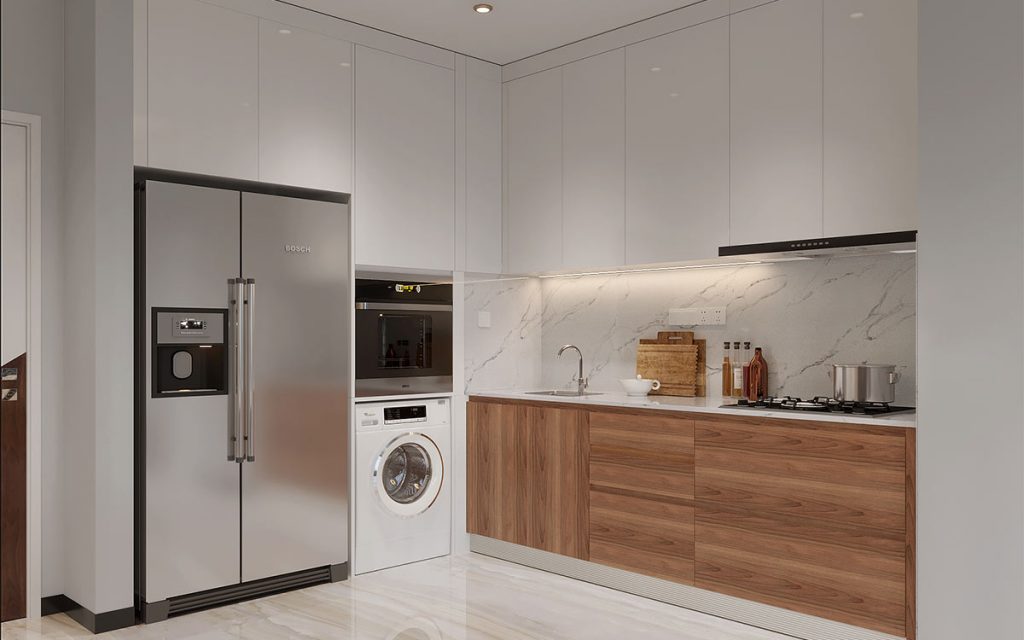
Not every white kitchen must be entirely white. Combining white upper cabinets with darker lower cabinetry creates balance and practicality.
Designers often pair white with:
- White and charcoal
- White and sage green
- White and natural walnut
This layered approach helps large kitchens feel grounded while keeping the overall space bright.
10. Prioritize Natural Light
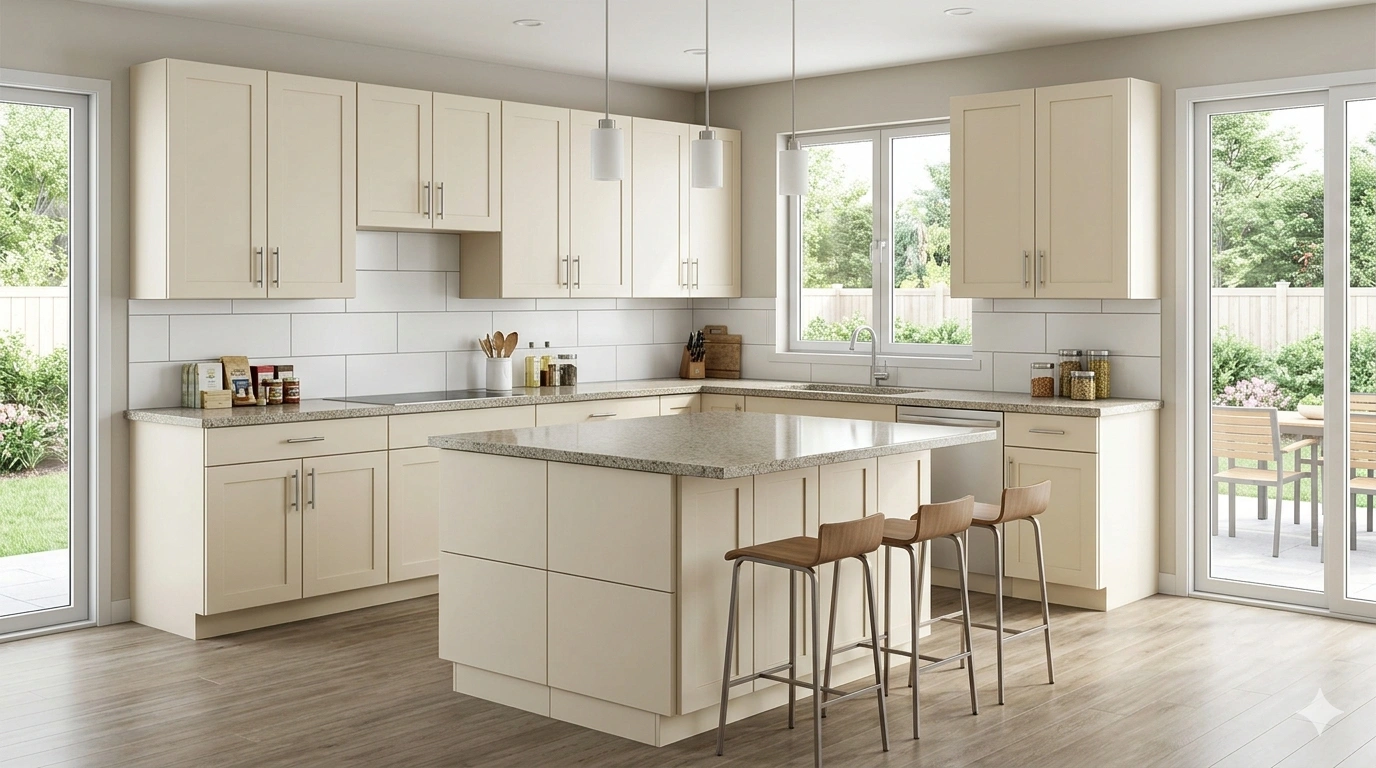
Natural light remains one of the most important components of successful kitchen design. White surfaces amplify daylight, making spaces feel open and inviting.
Design strategies include:
- Expansive windows
- Skylights
- Glass doors
- Reflective surfaces
White kitchens with abundant natural light consistently photograph well and maintain long-term appeal.
11. Add Open Shelving Strategically
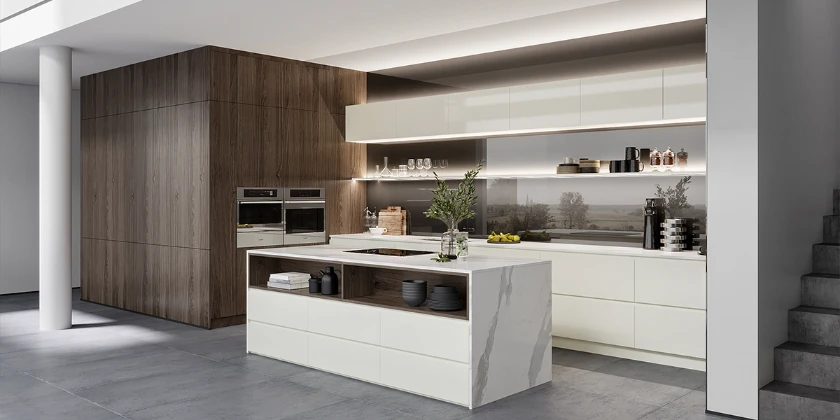
Open shelving can personalize white kitchens without sacrificing sophistication. However, restraint is essential.
Designers should use shelving to display:
- Handmade ceramics
- Neutral-toned dishes
- Sculptural objects
- Minimal greenery
Too much open storage can create visual chaos, so balance is key.
12. Minimalist Handleless White Kitchens
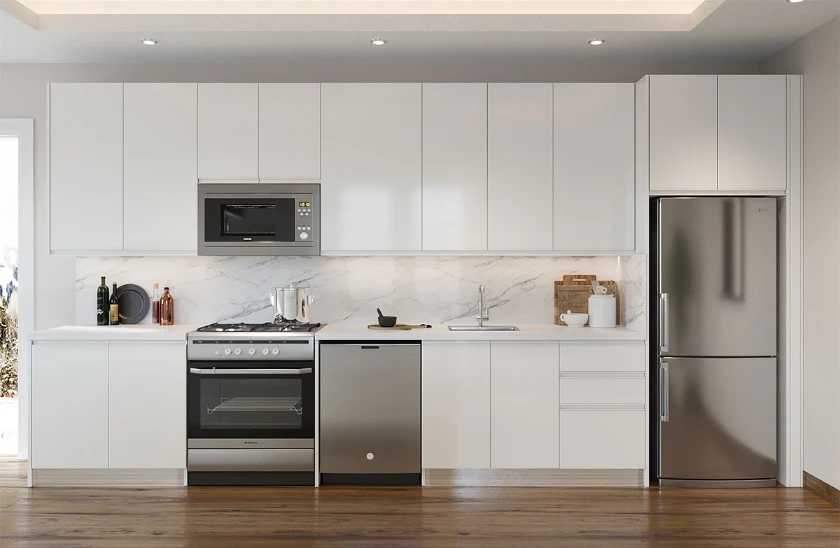
Handleless cabinetry continues to dominate luxury kitchen design due to its sleek, uninterrupted appearance.
Key features include:
- Push-to-open mechanisms
- J-pull profiles
- Seamless integrated appliances
- Clean horizontal lines
Minimalist layouts particularly benefit urban apartments and contemporary small kitchens where visual simplicity enhances spatial perception.
13. Sustainable White Kitchen Materials
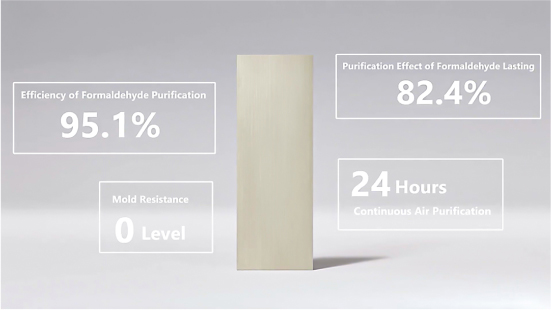
Sustainability is no longer optional in high-end interior design. Clients increasingly prioritize eco-conscious cabinetry and finishes.
Designers should consider:
- E1-standard eco-friendly boards
- Recycled materials
- Low-VOC finishes
- Sustainable wood sourcing
- Energy-efficient lighting
A well-designed white kitchen should not only look timeless but also support healthier indoor environments.
14. Create a Seamless Backsplash
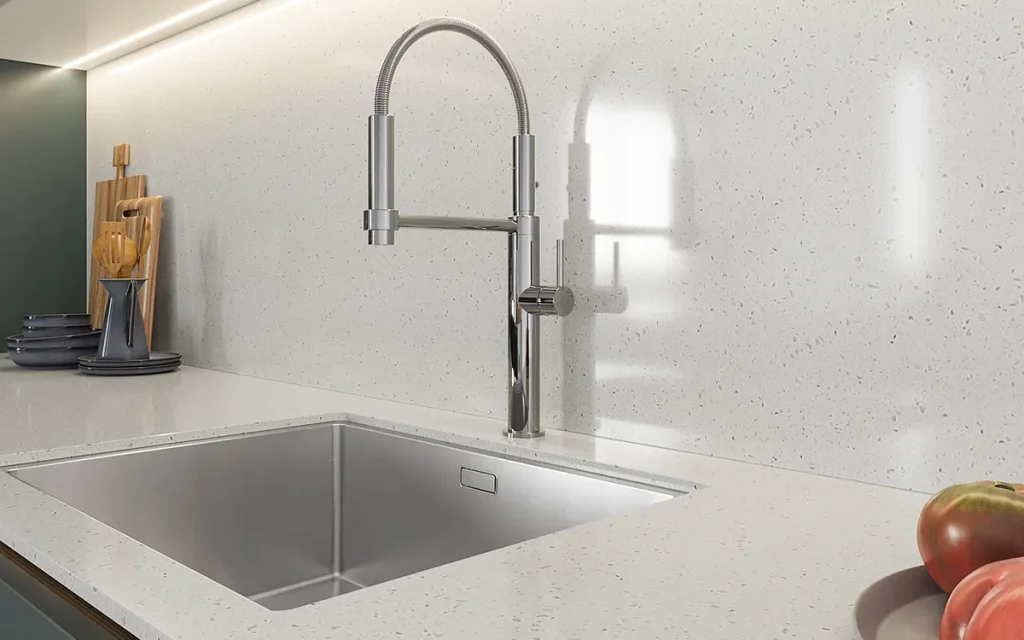
Full-height slab backsplashes deliver a clean and luxurious appearance that remains highly relevant in premium residential projects.
Advantages include:
- Fewer grout lines
- Easier maintenance
- Continuous visual flow
- Elevated aesthetic value
Materials such as quartz, porcelain slabs, and marble work exceptionally well in white kitchens.
15. Add Architectural Details
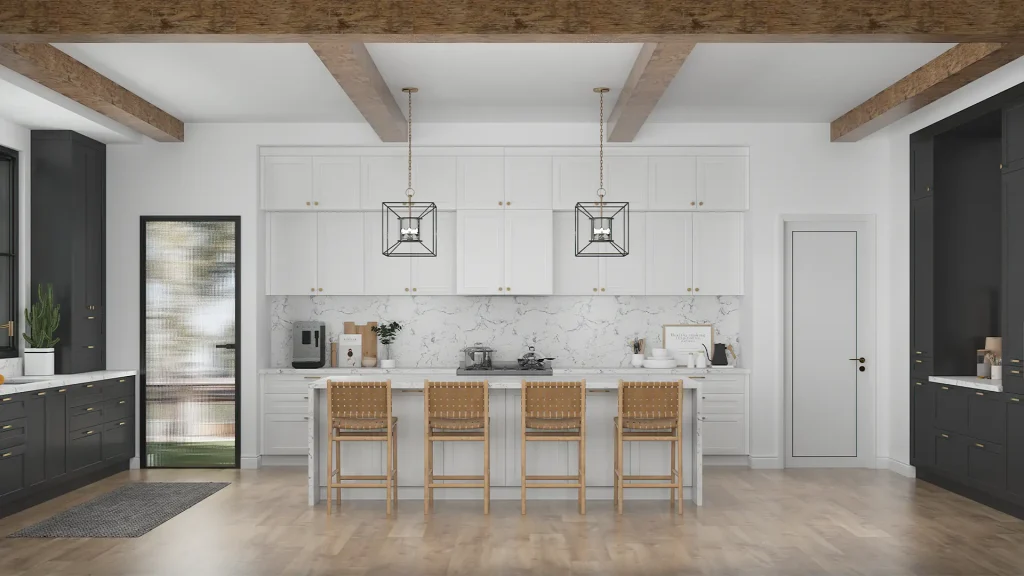
Architectural elements can transform a simple white kitchen into a memorable design statement.
Examples include:
- Coffered ceilings
- Arched doorways
- Decorative moldings
- Fluted island panels
- Exposed beams
These details introduce personality while preserving a timeless palette.
16. Incorporate Hidden Storage Solutions
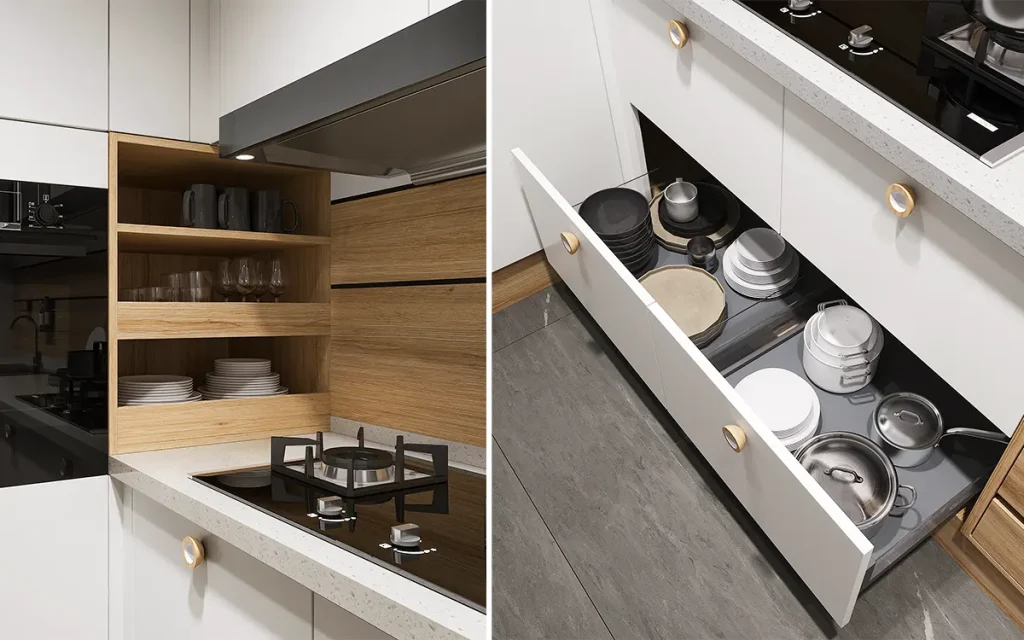
Modern kitchens increasingly prioritize organization and functionality. Hidden storage helps maintain clean surfaces and minimalist aesthetics.
Popular features include:
- Appliance garages
- Pull-out pantry systems
- Concealed recycling compartments
These details improve user experience without compromising design integrity.
17. Use Large Kitchen Islands as Focal Points
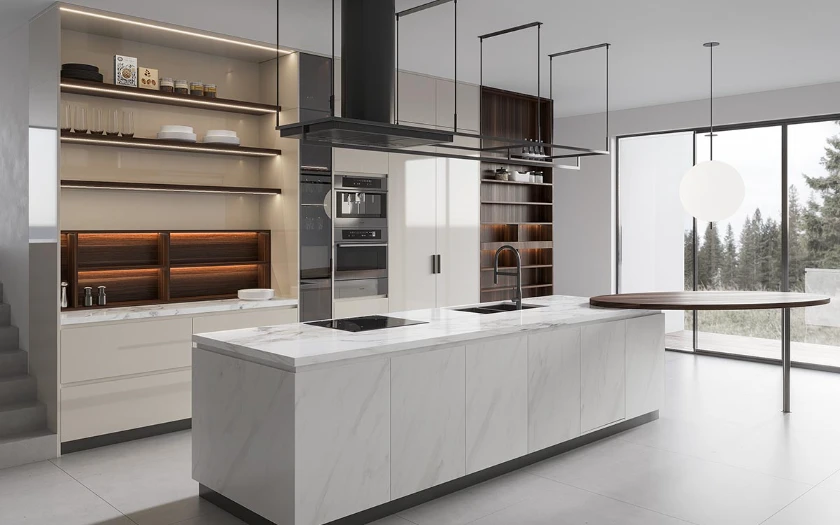
The kitchen island remains the social center of many homes. In white kitchens, oversized islands can anchor the space while enhancing functionality.
Interior designers often include:
- Waterfall edges
- Integrated seating
- Built-in storage
- Contrasting materials
Large islands also create opportunities for dramatic lighting installations above.
18. Blend Traditional and Contemporary Elements
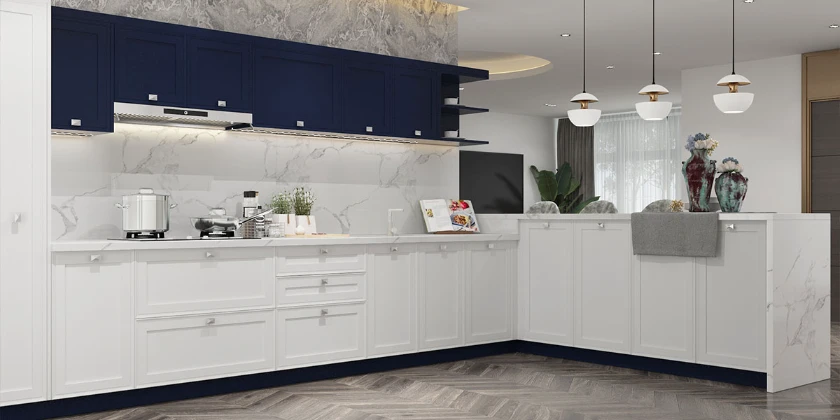
The most timeless white kitchens rarely feel locked into a single design era. Mixing classic materials with modern details creates interiors that evolve naturally over time.
Examples include:
- Traditional shaker cabinetry with minimalist lighting
- Contemporary hardware paired with classic marble
- Modern layouts within heritage architecture
This balance helps kitchens remain relevant even as trends shift.
19. White Kitchens with Metallic Accents
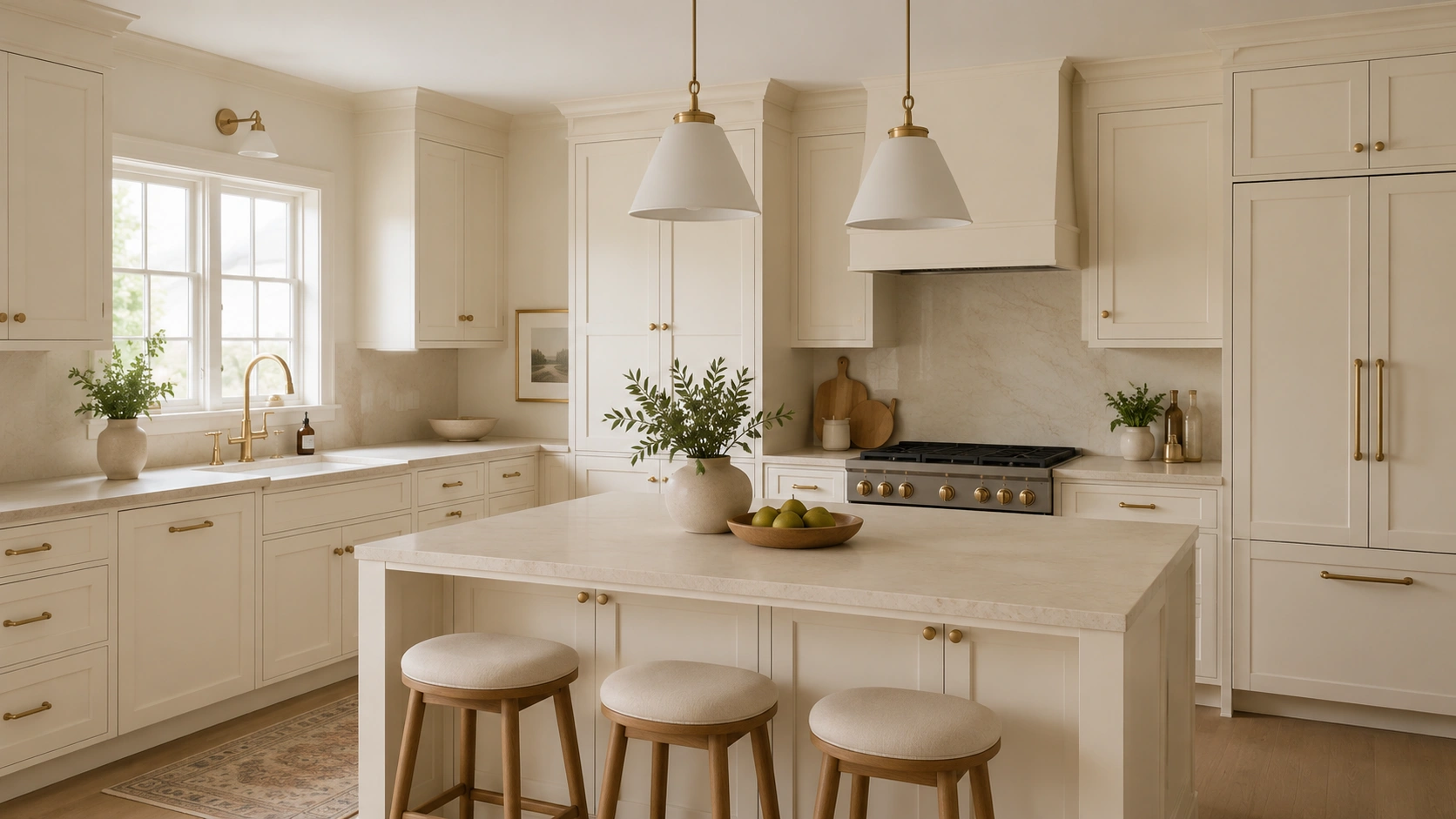
Metallic finishes add sophistication and warmth to all-white interiors.
Trending finishes include:
- Brushed brass
- Champagne gold
- Stainless steel
- Bronze
Subtle metallic detailing on lighting, faucets, and hardware creates refined contrast while preserving timeless elegance.
20. Design for Flexibility
Kitchens designed for adaptability will continue to perform well beyond 2030. Flexible layouts and neutral foundations allow homeowners to update aesthetics without full renovations.
Future-proof strategies include:
- Modular storage
- Neutral color palettes
- Replaceable hardware
- Durable countertop materials
White kitchens excel in this regard because they can evolve alongside changing décor preferences.
Conclusion
White kitchens continue to dominate interior design because they combine versatility, elegance, and longevity. The best designs avoid sterile minimalism and instead focus on texture, warmth, craftsmanship, and functionality.
OPPOLIA provides turnkey whole-house solutions, covering everything from design to installation. We offer 18 materials and 133 color options for kitchens, giving interior designers exceptional flexibility for residential and commercial projects. All of our materials are eco-friendly and comply with the European E1 standard.
Whether you need custom cabinetry for high-end projects or RTA cabinetry for standard developments, you can find it all at OPPOLIA. We also offer wholesale pricing for bulk orders, making us a trusted partner for developers, contractors, and design professionals worldwide.
Find out more about OPPOLIA’s kitchen collections and contact us today to get a free bulk quote!
FAQs About White Kitchen Ideas
White kitchens are considered timeless because they create a clean, bright, and versatile foundation that works with many interior styles. White cabinetry also adapts easily to changing trends, materials, and décor updates, making it a long-lasting design choice.
The best materials for modern white kitchen ideas include quartz countertops, matte lacquer cabinetry, natural wood accents, porcelain backsplashes, and eco-friendly engineered panels. These materials offer durability, easy maintenance, and a contemporary appearance.
Designers can make small kitchens appear larger by using white cabinetry, reflective surfaces, integrated lighting, and floor-to-ceiling storage. White finishes help reflect natural light and create a more open visual effect in compact spaces.
Popular colors that pair well with white kitchen design ideas include natural wood tones, matte black, warm beige, soft gray, brushed brass, and earthy green accents. These combinations add depth while preserving the kitchen’s clean aesthetic.
Modern white kitchens are easier to maintain than many people expect. High-quality matte finishes, stain-resistant quartz countertops, and durable cabinet coatings help reduce fingerprints, scratches, and visible dirt, making white kitchens practical for everyday use.